Ask a room full of communications professionals which AI tools they couldn’t live without and you’ll hear a long list of platforms, apps and assistants. But look beyond the names and a clearer picture begins to emerge.
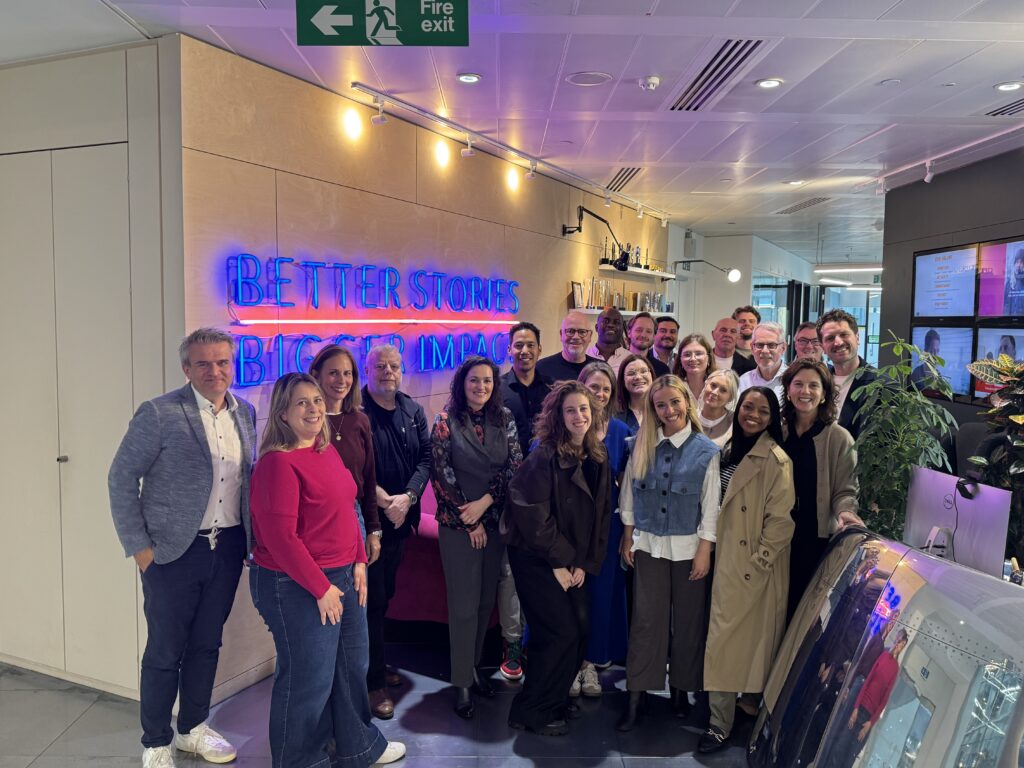
We asked our partners across the Brands2Life Global Network to share the AI and everyday tools they rely on most. While there are a number of different tools, the responses point to clear global trends that are reshaping communications.
AI is becoming specialised, not general
The biggest shift isn’t simply that more people are using AI, it’s that they’re building purpose-built AI workflows. At Brands2Life, we’re turning individual experimentation into shared, repeatable workflows. Our teams are using OpenAI’s updated desktop app (which brings together ChatGPT and Codex) to develop purpose-built agents for specialist tasks.
One of our German partners, Maisberger, is creating custom GPTs for individual clients, tailored to their tone of voice, terminology and communications priorities. Canva AI is accelerating the production of on-brand creative assets, while ElevenLabs is enabling multilingual voice-overs, podcast production and media training simulations. And Imageware in Italy is working with Filmora and Synthesia, AI video generator tools.
Meanwhile, Deborah Gray from our Spanish partner Canela captured how seamlessly AI has become part of everyday life: “Claude. I can’t plan a holiday without it.”
AI is no longer just a writing assistant – it’s becoming a collection of specialists, each solving a different communications challenge.
Success is increasingly measured by AI visibility
Communications measurement is evolving just as quickly, with traditional tools such as CoverageBook remaining invaluable for demonstrating campaign impact. Semrush continues to help teams understand search visibility and competitor performance and HypeAuditor is enabling more informed influencer recommendations through richer audience insights.
But our Indian partner, Candour Communications, highlighted perhaps the biggest emerging shift. Using Otterly.ai, the team measures whether earned media is actually influencing AI-generated answers across ChatGPT, Perplexity, Microsoft Copilot and Google AI Overviews. They’re benchmarking visibility against competitors, identifying the questions buyers are asking and even spotting AI hallucinations before they become reputational risks.
The implication is clear: communications teams are beginning to measure not just what journalists write, but what AI learns.
Technology works best when it supports people
Not every essential tool is powered by artificial intelligence.
Patricia Zylberman from Sherlock Communications in Latin America highlighted ClickUp as the platform that keeps projects, deadlines and teams aligned across multiple markets. Sometimes the biggest productivity gains come from better collaboration rather than smarter algorithms.
The same applies outside work. Toni from Maisberger shared examples of colleagues using AI assistants to plan meals based on the contents of their fridge or even experiment with songwriting ideas. These aren’t revolutionary use cases, but they show how naturally AI is becoming part of everyday problem-solving.
And then came our favourite response of all. One communications professional nominated a hand-held fan as their indispensable tool this summer.
Low-tech. Lightweight. No batteries. No subscription. More useful than their phone during the recent heatwave.
Perhaps that’s the biggest lesson of all. Around the world, communications professionals are embracing AI at remarkable speed. But they’re doing so pragmatically, choosing the right tool for the right job rather than chasing the newest technology.
The future of communications won’t belong to those with the most AI tools. It will belong to those who know when to use them, when something wonderfully analogue is the better solution.