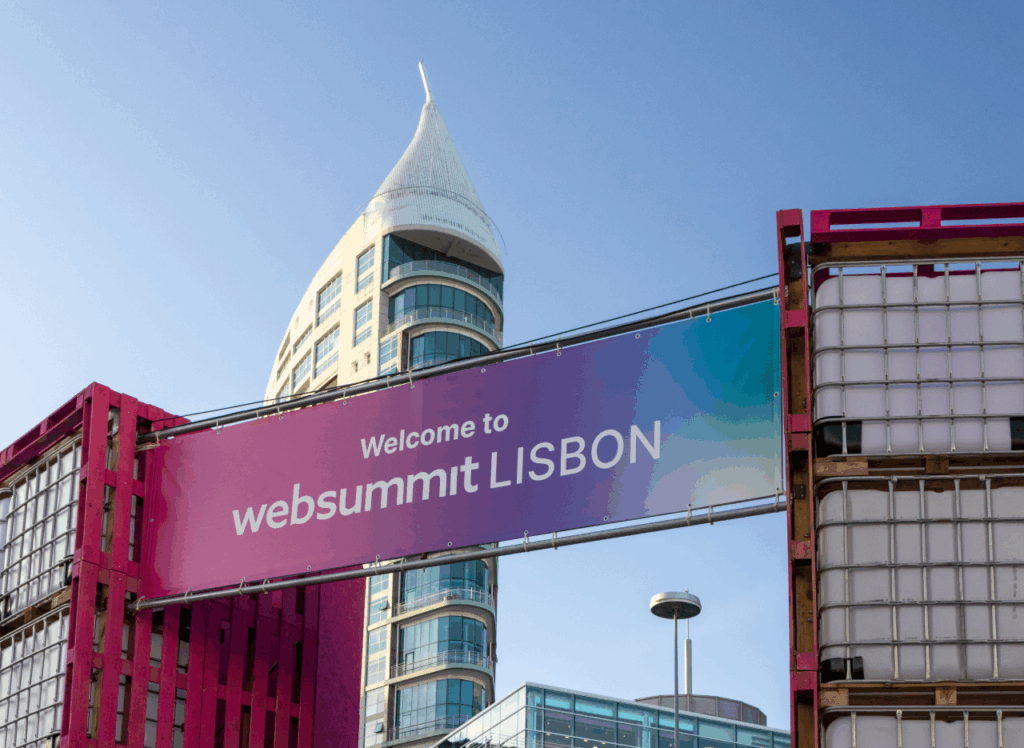
The 2025 Web Summit in Lisbon has closed the doors on its latest edition with 71,000 attendees from 157 countries and some criticism of the event’s sustainability due to the saturation of airports and hotels. Ten years after moving from Dublin, Lisbon has once again become the epicentre of digital innovation, bringing together 2,700 start-ups and nearly 900 speakers. China was the guest of honour, to such an extent that Paddy Cosgrave, CEO of the Web Summit, proclaimed that ‘Western technological dominance is coming to an end’.
In addition to the big tech companies, we heard from leaders of other companies that are shaping the evolution of the digital sector: from Matthew Prince of Cloudflare, whose services protect 20% of Internet traffic, to Keily Blair of OnlyFans, who wants to reorient the platform beyond adult content; and Cristóbal Valenzuela of Runway, who has brought artificial intelligence to film studios. We have summarised some of the main announcements, trends and developments from this year’s edition.
AI comes to education
One of the topics that caused the most debate this year has been the promise by a Portuguese minister to provide each student with an AI tutor to guide their learning. Educational technology (EdTech) is always very much in evidence at the Web Summit. Last year, Portuguese start-up Intuitivo won the PITCH award for its digital assessment platform, and this year Spanish company EdTech Learning Solutions showed how it uses artificial intelligence to personalise learning and offer adaptive tutoring.
In addition, the European Commission took advantage of the event to defend its new regulatory framework for AI, which seeks to balance innovation with the protection of citizens’ fundamental rights. However, its implementation could be postponed in the face of outright opposition from large American technology companies. There has also been much talk about how to reduce the crazy energy consumption of data centres.
From ‘vibe coding’ to robots
Another popular trend at Web Summit 2025 was ‘vibe coding’, a new form of programming in which AI generates code snippets from instructions entered using natural language. In addition to speeding up software development, it opens the door for ‘anyone’ to create anything from a web page to a mobile application.
The latest advances in robotics development were also presented: from dancing robots, such as the humanoids from Unitree Robotics, to autonomous robots for industry from Amazon Robotics and the Spot robotic dog developed by Boston Dynamics.
Fintech in our pockets
Ten years ago, it was a start-up called Revolut that made a name for itself in Lisbon. This year, Cosgrave himself has pointed to Brazil’s Pix payment system as one of the innovations with the greatest potential to transform the global financial landscape.
Meanwhile, Visa has announced a pilot project that will allow payments to be made with stablecoins (cryptocurrencies with little fluctuation) through its Visa Direct network. This could be the link that connects traditional finance with the world of digital assets.
However, none of this will work without user trust. That is why the sessions also addressed the role of AI in improving cybersecurity and financial decision-making, such as assistants for finance and investment management.
The race for sport and equality
On the opening day, former tennis player Maria Sharapova explained how AI is changing the way athletes prepare, train and recover. To drive these advances, IBM is launching the Sports Tech Startup Challenge, a competition for startups that improve athlete performance, stadium operations and the fan experience.
The popular sportswoman and entrepreneur has been one of the most prominent female faces at Web Summit 2025, where 40% of the participating startups are founded by women and a specific side event has been held: Women in Tech.
Portugal: Europe’s technology hub
As the 2025 Web Summit in Lisbon establishes itself as one of the world’s leading technology events (with editions in Rio de Janeiro, Doha and Vancouver), Portugal continues to take steps to position itself as the major technology hub of southern Europe.
One of the most important announcements at this year’s event was that Microsoft will invest more than €9 billion in an artificial intelligence data centre in Sines (Portugal), a project led by national talent and investment – Defined.ai, the Portuguese scale-up led by Daniela Braga that markets ethical and licensed data for AI model training.
In addition, Google plans to lay a submarine cable from this same location on the Portuguese coast that will link up with the United States and strengthen the country’s connectivity.
Stay tuned for more technological innovation and developments from Portugal.